What Is Backfill & Optical Structural Bonding in Photonic Devices?
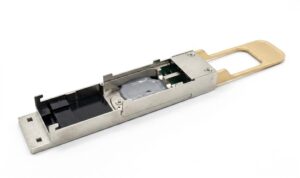
In high-speed data transceiver modules — including QSFP, CFP, and co-packaged optics — the bonding step that fills and structurally locks optical components in place is one of the most critical process steps.
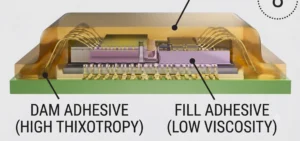
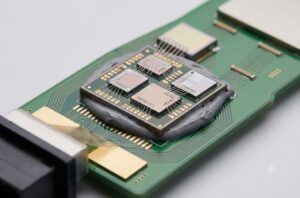
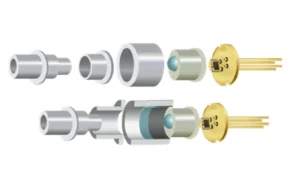
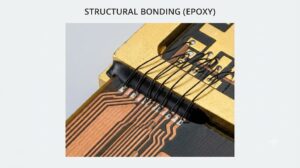
Backfill bonding refers to encapsulating or filling the space around optical subassemblies (lenses, prisms, fiber arrays) after active alignment. Optical structural bonding creates a permanent mechanical joint between optical elements and the housing or PCB substrate.
Why This Bond Step Is Critical
These bonds must withstand thermal cycling, high humidity, and mechanical shock — all without compromising optical transmission in the 800–1550 nm operating window. The adhesive must remain dimensionally stable to protect the precise alignment achieved during assembly.
EPO-TEK® products recommended for this application are 353NDP, H70E-2, and VC-136 — each engineered to meet the unique demands of optical packaging at scale.
Recommended EPO-TEK® Products for Backfill & Optical Structural Bonding
Two primary products cover the full range of process requirements — from optically transparent backfill to thermally managed structural encapsulation.
High temperature, humidity resistant epoxy — the industry-standard choice for optical backfill, ferrule sealing, and V-groove array bonding in high-speed data transceivers.
Humidity resistant
NASA ASTM E595
HI-REL grade
Thermally conductive, electrically insulating epoxy for glob top, COB/TAB die packaging, and structural bonding where heat dissipation is also required.
Electrically insulating
Moisture & solvent resistant
2-day pot life
EPO-TEK® 353NDP — Technical Specifications
The primary optical structural bonding adhesive for high-speed data transceivers. Combines high optical transmission, strong humidity resistance, and NASA-grade low outgassing in a single two-part formulation.
| Property | Value | Note |
|---|---|---|
| Components | Two-part | 10:1 by weight (A:B) |
| Viscosity @ 23°C | 3,600 cPs | Pourable — flows into V-grooves & fine cavities |
| Recommended Cure | 120°C / 1 hour | Alt: 80°C/30 min, 100°C/10 min, 150°C/1 min |
| Glass Transition (Tg) | ≥ 90°C | |
| Die Shear (initial) | 38 kg | |
| Die Shear (7d @ 85°C/85%RH) | 32 kg | Strong humidity retention |
| Die Shear (2000h @ 85°C/85%RH) | 15 kg | Long-term field deployment performance |
| Spectral Transmission | ≥ 98% @ 800–1000 nm | Compatible with O-band & C-band (1310/1550 nm) |
| Refractive Index | 1.569 @ 589 nm | |
| NASA Outgassing | Passes ASTM E595 | Required cure conditions must be followed |
| Operating Temp | < 350°C | Intermittent |
Primary Use Cases
Active Alignment & V-Groove Arrays
Pourable viscosity flows into fine V-groove geometry without voids — locking alignment after active positioning
Environmental Sealing
Seals opto-packages against humidity and contamination while maintaining optical path integrity
Fiber-to-Ferrule Sealing
Designed for fiber sealing in the 800–1550 nm range — compatible with O-band and C-band telecom windows
HI-REL Applications
NASA ASTM E595 outgassing compliance makes it suitable for automotive, defense, and space photonics
EPO-TEK® H70E-2 — Technical Specifications
Preferred when thermal management is required alongside structural bonding — particularly for glob top, COB/TAB die packaging, and chip protection in micropackage assemblies.
| Property | Value | Note |
|---|---|---|
| Components | Two-part | 1:1 by weight (A:B) |
| Viscosity @ 23°C | 9,000–15,000 cPs | Thixotropic paste |
| Recommended Cure | 150°C / 1 hour | |
| Glass Transition (Tg) | ≥ 80°C | |
| Lap Shear Strength | > 2,000 psi | |
| Die Shear Strength | ≥ 5 kg (1,778 psi) | |
| Thermal Conductivity | 1.0 W/mK | Active heat dissipation from die/substrate |
| Volume Resistivity | ≥ 8 × 10¹² Ω·cm | Electrically insulating |
| Shore D Hardness | 65 | |
| Pot Life | 2 days @ RT | Long working window for production lines |
VC-136 is also specified for backfill and optical structural bonding in this application family. Contact EPO-TEK® Technical Services at advancedmaterialorg@gmail.com for product-specific recommendations based on your cure process and optical wavelength requirements.
EPO-TEK® 353NDP vs H70E-2 — Key Differences
| Parameter | EPO-TEK® 353NDP | EPO-TEK® H70E-2 |
|---|---|---|
| Primary use case | Optical backfill, ferrule sealing, V-groove arrays | Glob top encapsulation, structural bonding with heat management |
| Mix ratio | 10:1 (A:B by weight) | 1:1 (A:B by weight) |
| Viscosity | 3,600 cPs (pourable) | 9,000–15,000 cPs (thixotropic paste) |
| Optical transparency | ≥98% @ 800–1000 nm Optical path safe | Opaque — not for optical path |
| Thermal conductivity | N/A | 1.0 W/mK Active heat |
| Cure temperature | 120°C / 1 hr | 150°C / 1 hr |
| Humidity resistance | 15 kg die shear after 2000h @ 85°C/85%RH Long-term field | Excellent moisture & solvent resistance |
| Tg | ≥ 90°C | ≥ 80°C |
| NASA outgassing | Passes ASTM E595 HI-REL | Not specified |
| Best for | Datacom transceivers, HI-REL sensors, active alignment | COB/TAB die packaging with thermal management |
Where Does Backfill Bonding Fit in the Transceiver Assembly Process?
In the fabrication of high-speed data transmission devices such as QSFP+ and 400G/800G transceivers, assembly follows a structured sequence of bonding steps.
Position 2 in the EPO-TEK® Process Flow
Backfill and optical structural bonding is Step 2 in the EPO-TEK® recommended assembly sequence — occurring after low-stress structural bonding (Step 1) but before active alignment and die attach (Steps 3–4).
At this stage, the adhesive provides mechanical stability to aligned optical elements — including lenses, fiber arrays, and PLC chips — locking them in position so that the precisely controlled optical path is maintained through subsequent thermal and mechanical stresses.
Key Process Requirements at This Step
Low Shrinkage on Cure
Preserve sub-micron alignment achieved during active alignment — any shrinkage directly shifts the optical path
High Optical Transmission
Adhesive must not attenuate signal in the 800–1550 nm working range — ≥98% transmission required
Thermal & Humidity Stability
Bonds must survive accelerated aging (85°C/85%RH) for long-term field deployment in telecom and datacom environments
Compatible Viscosity
Material must flow into fine V-grooves and gaps without voids, then remain stable during cure without sagging
Frequently Asked Questions
EPO-TEK® 353NDP is the primary recommendation for optical structural bonding and backfill in high-speed data transceiver devices. It combines high optical transmission (≥98% at 800–1000 nm), strong humidity resistance (retaining 15 kg die shear after 2000 hours at 85°C/85%RH), and NASA ASTM E595 low outgassing compliance. Its pourable viscosity of 3,600 cPs allows it to flow into V-groove arrays and fine optical cavities without voids.
EPO-TEK® 353NDP demonstrates strong retention of adhesion after humidity exposure. Initial die shear strength is 38 kg, dropping to 32 kg after 7 days at 85°C/85%RH and retaining 15 kg after 2000 hours at the same conditions. This makes it suitable for long-term field deployment in telecom and datacom environments where condensation and thermal cycling are common.
Backfill bonding fills the void space around an aligned optical assembly to lock it in place after active alignment — preventing movement caused by thermal cycling or vibration. Optical structural bonding is the primary adhesive joint that mechanically holds an optical component (lens, prism, fiber, PLC chip) to a substrate or housing. In practice, the same adhesive — such as EPO-TEK® 353NDP — is often used for both purposes in photonic packaging.
Yes. EPO-TEK® 353NDP passes the NASA low outgassing standard ASTM E595 when properly cured at 120°C for 1 hour. Low outgassing is critical in sealed optical packages because condensed volatile residues can form contaminating films on optical surfaces, degrading transmission over time.
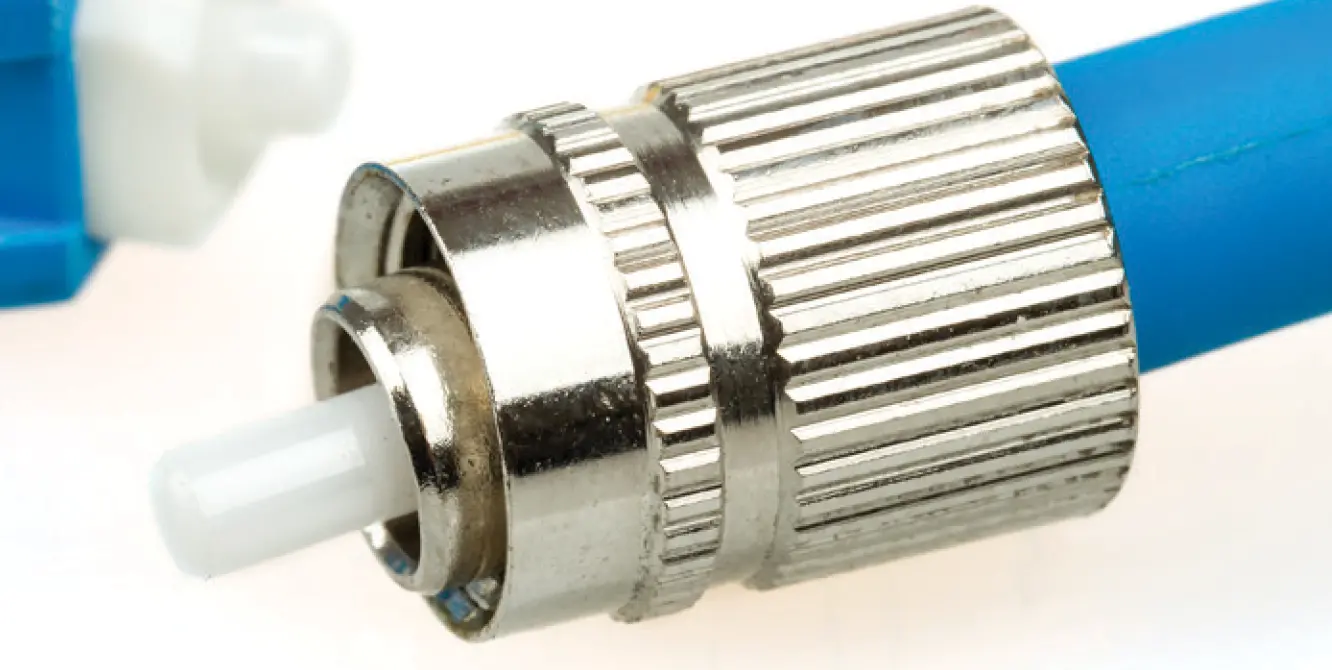
Yes. EPO-TEK® 353NDP is designed for sealing fiber into ferrules while transmitting light in the 800–1550 nm range — covering the standard O-band (1310 nm) and C-band (1550 nm) windows used in telecom and datacom systems. It is also suitable for V-groove arrays and environmental sealing of opto-packages in high-speed transceiver devices.
The recommended cure is 120°C for 1 hour. Alternative cure schedules include 150°C / 1 minute, 120°C / 5 minutes, 100°C / 10 minutes, and 80°C / 30 minutes — offering flexibility for temperature-sensitive assemblies. Note that alternative schedules may not achieve all listed performance properties.
According to EPO-TEK®’s own application guide for High-Speed Data Transmission Devices, Position 2 (Backfill / Optical Structural Bonding) is assigned to 353NDP, H70E-2 (heat cure), and VC-136. For optical path applications requiring high transmission and humidity resistance, 353NDP is the first choice. H70E-2 is preferred when thermal conductivity is also needed alongside structural bonding.
High-Speed Data Transmission Devices — Full Application Guide
This article is part of a structured content series covering all critical bonding steps in QSFP, CFP, and co-packaged optical transceiver assembly.
← Step 1: Low Stress Structural Bonding
EPO-TEK® 320, T7109 — structural bonding with optical opacity and low mechanical stress
● Step 2: Backfill & Optical Structural Bonding
EPO-TEK® 353NDP, H70E-2 — you are here
Step 3: Active Alignment →
EPO-TEK® HYB-353ND Series, OG198-55 — UV or dual-cure adhesives for active alignment lock
Step 4: Die Attach →
EPO-TEK® H20E, H20E-HC — high electrically and thermally conductive die attach adhesives